Thimphu Drubchen 2026: 17 September at Tashichho Dzong
Festival dates: 17–19 September 2026 *(precedes Thimphu Tshechu, 21–23 September)*
Most travellers planning a Bhutan trip in September come for Thimphu Tshechu — the three-day public festival of masked dances at Tashichho Dzong. Far fewer know that the four days before Tshechu host something arguably more sacred: Thimphu Drubchen.
Drubchen is the solemn three-day prayer ritual that originally inspired Thimphu Tshechu. If Tshechu is the celebration, Drubchen is the ceremony beneath it. For visitors willing to extend their trip by a few days, attending both is one of the most complete cultural experiences Bhutan offers.
What is Thimphu Drubchen?
"Drubchen" loosely translates as "great accomplishment" — a major Buddhist ritual performed continuously over multiple days by monks reciting prayers, conducting consecrations, and invoking protective deities. It's older than Tshechu, more sacred in nature, and far less of a public spectacle.
Honouring Pelden Lhamo
Thimphu Drubchen specifically honours Pelden Lhamo (Mahakali) — the wrathful female protective deity of Bhutan and the chief guardian of the Drukpa Kagyu lineage. The rituals are intended to invoke her protection over the country, the sangha (monastic community), and all sentient beings for the coming year.
Held at Tashichho Dzong
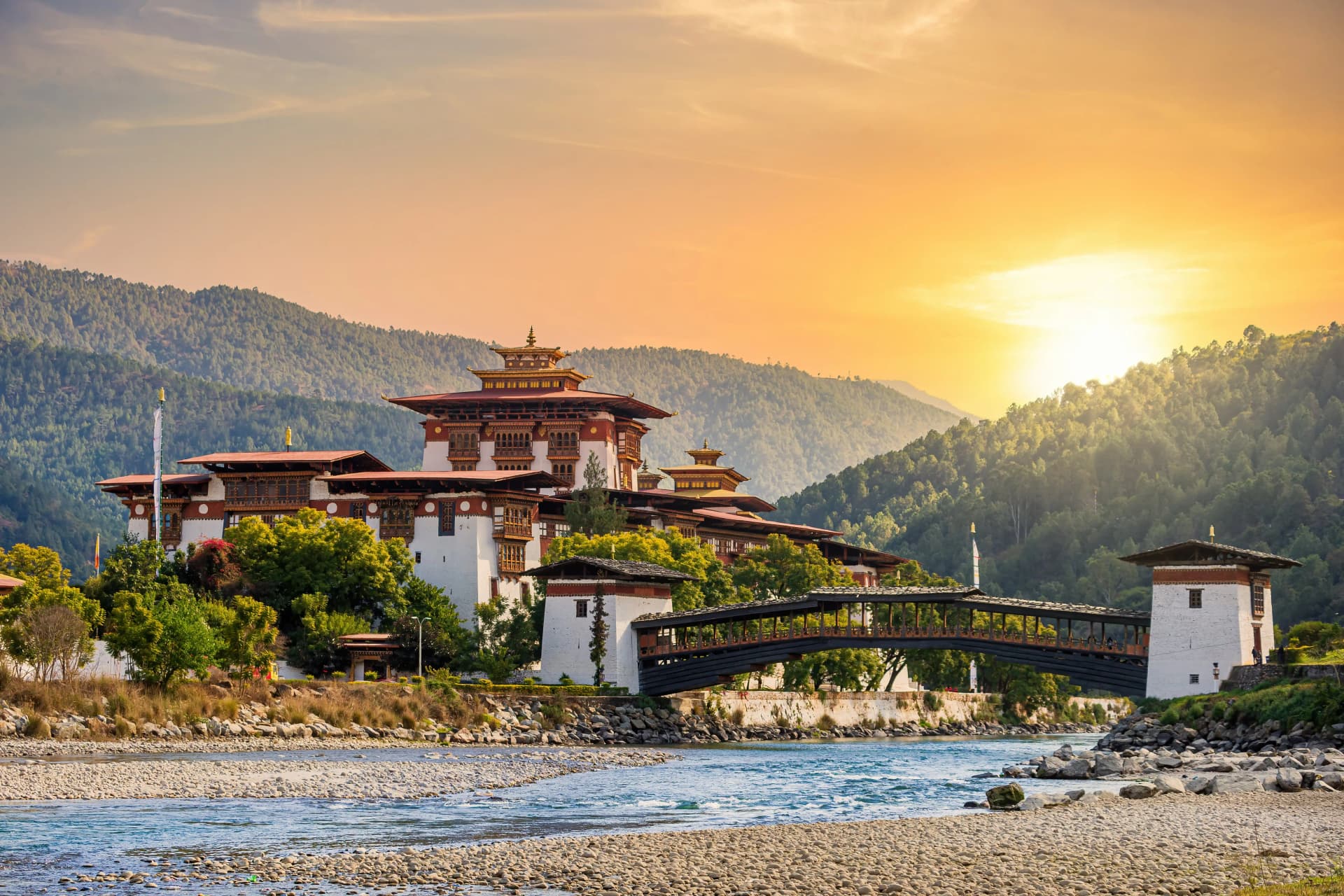
The festival takes place inside Tashichho Dzong — the seat of Bhutan's central government and the summer residence of the Je Khenpo (the Chief Abbot). The dzong itself is one of Bhutan's most important political and religious buildings, dating in its current form to 1968.
Performed by the Zhung Dratshang
Drubchen is performed by monks of the Zhung Dratshang — Bhutan's Central Monastic Body. Unlike the more open atmosphere of Tshechu, much of Drubchen is conducted as serious continuous ritual, with lay observers welcome but expected to keep a respectful distance.
A Quieter Audience
Where Thimphu Tshechu draws tens of thousands of festival-goers from across Bhutan and abroad, Drubchen remains intimate — local devotees, monks, and a small number of visitors. The atmosphere is reverent rather than festive.
2026 Dates
Thimphu Drubchen 2026: 17–19 September
Followed directly by:
Thimphu Tshechu 2026: 21–23 September
Festival dates follow the Bhutanese lunar calendar — Drubchen is held over the 8th, 9th, and 10th days of the 8th month, with Tshechu taking the 10th, 11th, and 12th. Your guide will confirm the exact daily programme on arrival.
How Drubchen Differs from Tshechu
This is the most important thing to understand if you're planning your trip:
| Drubchen | Tshechu | |
|---|---|---|
| Nature | Sacred prayer ritual | Public festival |
| Focus | Pelden Lhamo, protection prayers | Guru Rinpoche, blessings to public |
| Performance | Monastic recitation, sacred dance | Cham masked dances, public spectacle |
| Atmosphere | Solemn, reverent | Festive, colourful, social |
| Crowd | Small, mostly devout locals | Tens of thousands, all ages |
| Photography | Largely restricted | Generally permitted (no flash) |
| Visitor experience | Quiet observation | Active participation |
Both events take place at the same venue — Tashichho Dzong — back-to-back. There's no other festival pairing in Bhutan that offers this kind of contrast.
What to Expect at Drubchen
Continuous Sacred Rituals
The three days of Drubchen feature near-continuous ritual prayer, mantra recitation, and sacred consecrations. Monks rotate in shifts so the ritual never breaks. As a visitor, you arrive, sit respectfully on the periphery, and absorb the atmosphere.
Sacred Dances
Drubchen does include some cham (masked dances) — particularly on the final day — but they're more strictly religious in tone than the broader cham repertoire performed at Tshechu. The famous Pelden Lhamo dance is the highlight.
Final-Day Procession
The closing day of Drubchen typically includes a sacred procession around the dzong, with monks carrying ritual implements and sacred relics. Highly photogenic — but follow your guide's lead on what is and isn't appropriate to photograph.
The Atmosphere
Bhutanese attendees come dressed in their finest gho and kira, often with extended families. They arrive early, find a spot inside the dzong courtyard, and stay for hours of quiet observation and prayer. The mood is unmistakably more reverent than at Tshechu.
Combining Drubchen and Tshechu — The Real Opportunity
Most foreign visitors plan a 7–10 day Bhutan trip around Thimphu Tshechu (21–23 September). If you can extend your trip by 4 days, you can experience both Drubchen and Tshechu — the complete arc of one of Bhutan's most important festival weeks.
A 12-day itinerary built around both:
- Days 1–2: Paro — arrive, acclimatise, hike to Tiger's Nest Monastery, visit Paro Dzong
- Day 3: Drive to Thimphu — settle in, visit Memorial Chorten, evening at the weekend market
- Days 4–6: Thimphu Drubchen (17–19 Sept) — three days of ritual at Tashichho Dzong, with afternoons free for Thimphu sights
- Day 7: Punakha day trip — visit Punakha Dzong (one of Bhutan's most beautiful) and return to Thimphu, OR rest day in Thimphu
- Days 8–10: Thimphu Tshechu (21–23 Sept) — three days of cham at the same dzong, dramatically different atmosphere
- Day 11: Drive back to Paro with stops at Dochula Pass
- Day 12: Departure
This is the kind of trip our Bhutan Festival Journey tour is built to handle — seasonal itineraries timed to multi-day festival arcs with permits, guides, accommodation, and dzong access pre-arranged.
If you only have time for one, here's the rule of thumb:
- Drubchen if you're drawn to authentic sacred ritual and quiet observation
- Tshechu if you want spectacle, colour, and a full public festival
- Both if you can spare the days — the contrast is the experience
Getting to Thimphu
Easier than most Bhutan festivals — Thimphu is the capital and only a short drive from Paro:
- From Paro Airport: 1–1.5 hour drive along a well-maintained road
- No domestic flights needed (unlike Bumthang or eastern festivals)
- Tashichho Dzong is a 5-minute drive from central Thimphu
This accessibility is part of why Thimphu Tshechu is so popular — and why extending your trip a few days to also catch Drubchen costs very little extra travel time.
What to Bring
- Layered clothing — Thimphu in mid-September is typically 12–22 °C with cool mornings and warm afternoons
- Light rain layer — September is the tail end of monsoon; brief afternoon showers possible
- Modest dress — covered shoulders and knees; remove hats inside the dzong
- Comfortable shoes — you may walk on uneven dzong courtyards and stand for long periods
- Sun protection — high-altitude sun even when temperatures feel mild
- A small cushion or scarf — for sitting on cold stone for extended periods
Festival Etiquette (Especially Important for Drubchen)
Drubchen is more religiously serious than Tshechu, so etiquette matters more:
- Move clockwise around religious structures
- Don't point your feet toward altars, monks, or sacred objects
- Lower your voice when inside the dzong
- Don't walk between monks performing rituals
- Photography: ask your guide before each segment — much of Drubchen is restricted
- Silence phones completely (not just vibrate)
- Stand if locals around you stand
- Accept any offerings (blessed water, blessed cords) with both hands
Bhutan Tourism Rules — A Reminder
Foreign visitors need a licensed Bhutanese guide for cultural sites and trekking, plus permits, SDF, and a visa. We arrange:
- Tourist visa
- Sustainable Development Fee ($100 per person per night)
- Permits to enter Tashichho Dzong (which is a working government building outside festival days)
- Licensed English-speaking guide who can interpret the rituals
- Accommodation, meals, and transport
Independent travel is not permitted. For festivals, this matters more than usual — your guide is the one explaining what's happening at each ritual stage, which is the difference between a meaningful experience and three days of confused observation.
Why Add Drubchen to a Tshechu Trip?
If you're already coming for Thimphu Tshechu — and many travellers are — extending your trip by four days to also catch Drubchen costs surprisingly little (one extra hotel block, the same SDF you'd pay regardless, no additional travel). What you gain:
- A side of Bhutan most foreign visitors never see
- Direct contrast between sacred ritual and public spectacle at the same venue
- More time to acclimatise, see Thimphu and Punakha at a relaxed pace
- Stronger photography (less crowded, more intimate moments at Drubchen)
- A genuine sense of how Bhutanese Buddhism actually operates as a daily practice, not just a festival show
Ready to Plan?
Thimphu Drubchen 2026 falls on 17–19 September, with Thimphu Tshechu following directly on 21–23 September. Together they form one of Bhutan's most concentrated festival weeks — and the best window for a single trip to capture two very different sides of Bhutanese Buddhism.
Thimphu hotels fill quickly during this period. Book by June 2026 for the best rooms.
Our Bhutan Festival Journey tour is the seasonal package built around festival dates exactly like this. Or, if you want a fully customised itinerary that combines Drubchen, Tshechu, Tiger's Nest, and any other Bhutan highlights you're drawn to, request a custom journey and our team will design a trip just for you.
Request to book — no payment yet →
Festival dates follow the Bhutanese lunar calendar. Dates and exact ritual schedule are confirmed with our local team closer to the event. [View full 2026 festival calendar](/bhutan-festival-calendar)